
What If We’ve Been Overlooking a Key Predictor of Member Retention?
For years, operators have relied on a familiar set of variables to understand retention. Demographics, visit frequency, onboarding experience, and staff interaction patterns have all been used to explain why some members stay and others drift away. These factors remain important, but they do not always tell the full story.
When we began analysing behavioural patterns across multiple operators, looking beyond traditional segmentation, an unexpected variable began to surface. Not as a replacement for existing models, but as an additional lens through which member behaviour could be interpreted. That variable was date of birth, specifically when grouped into zodiac categories.
At first glance, this may seem unconventional. However, when viewed through a behavioural lens, the patterns that emerged were consistent enough to warrant closer attention. What follows is not a claim of causation, but an observation of recurring tendencies that align with how different members engage with exercise over time.
Across multiple datasets, four broad behavioural profiles emerged, each corresponding to the traditional zodiac groupings of Fire, Earth, Air, and Water. What is interesting is not the labels themselves, but how closely these profiles mirror well-established behavioural drivers such as motivation, structure, social reinforcement, and emotional connection.
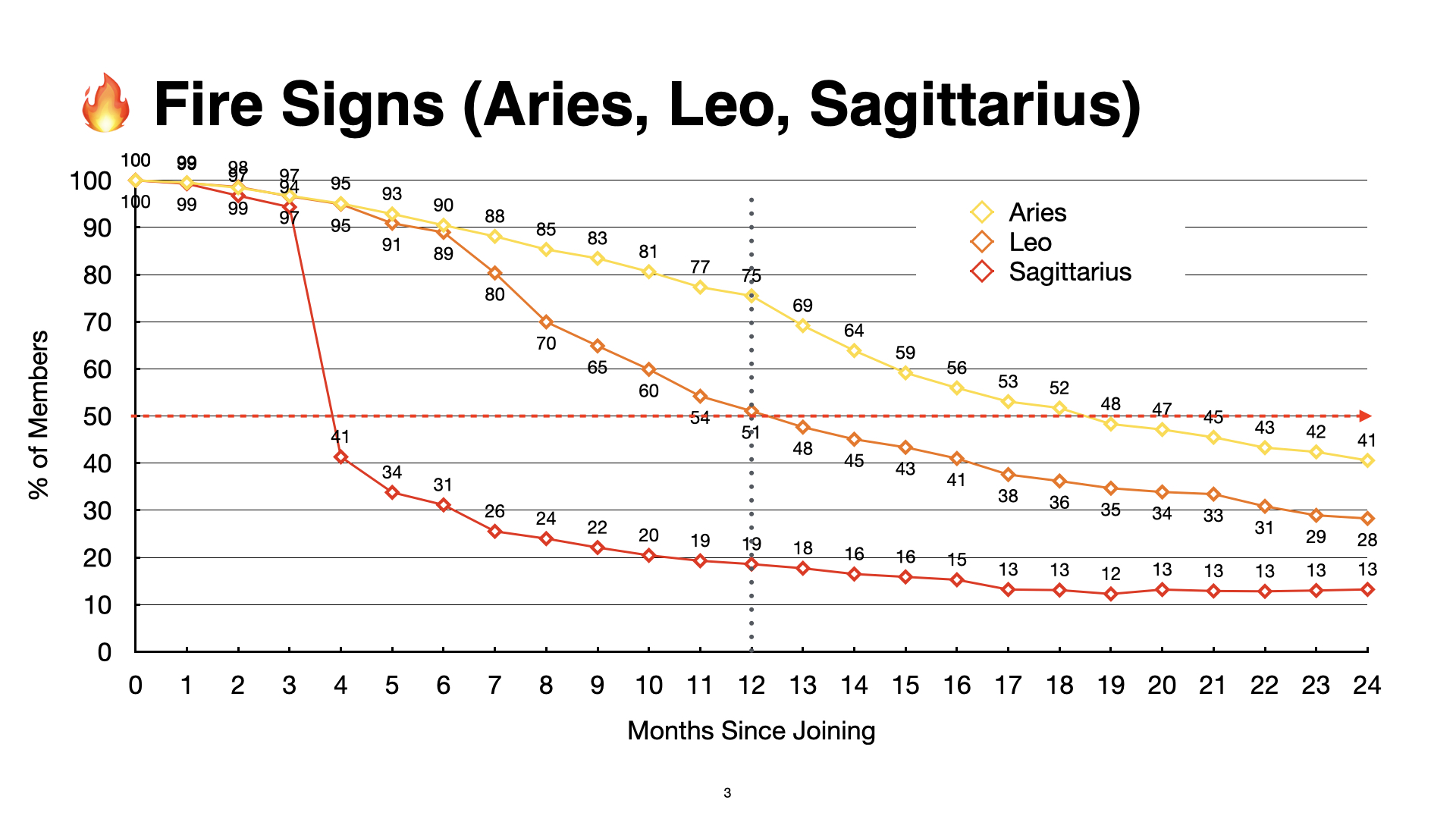 Fire signs, which include Aries, Leo, and Sagittarius, consistently demonstrate strong early engagement. These members are typically energetic, competitive, and drawn to high-intensity or goal-driven activity. They respond well to challenge and tend to immerse themselves fully in the early stages of membership. Visit frequency is often high in the first few weeks, particularly when there is a clear objective or sense of progression.
The challenge with this group is not getting them started, but keeping them engaged. Without variation, challenge, or a sense of forward momentum, their attendance can begin to decline. Routine, if perceived as repetitive, quickly loses its appeal. From an operational perspective, this suggests that Fire-type members benefit from programming that evolves. Short-term challenges, performance tracking, and visible milestones can help sustain their interest. Staff interaction also plays a role, particularly when it reinforces progress or introduces the next level of challenge at the right time.
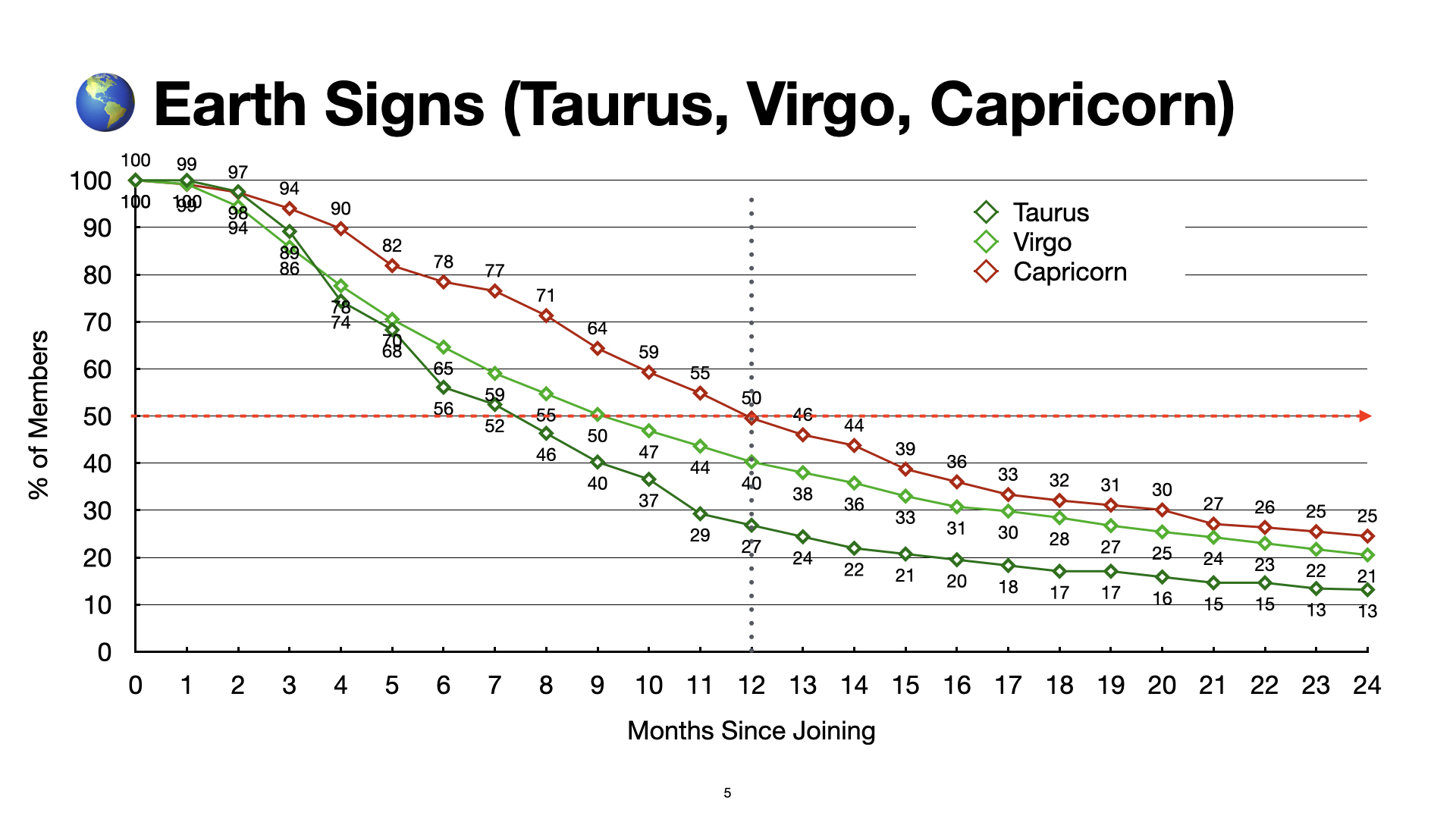
Earth signs, including Taurus, Virgo, and Capricorn, present a very different profile. These members are typically more structured, disciplined, and process-driven. They may not exhibit the same intensity in the early stages as Fire signs, but their behaviour is far more stable over time. Once they establish a routine, they tend to adhere to it.
Retention rates within this group are consistently higher, particularly when their experience is aligned with clarity and structure. They respond well to programmes that are planned, measurable, and purposeful. Progress tracking, scheduled sessions, and a clear pathway all support their long-term engagement.
For operators, this reinforces the importance of onboarding processes that provide direction. Earth-type members are less influenced by novelty and more by consistency. Removing ambiguity and providing a clear plan from the outset can significantly improve adherence. Staff do not need to motivate this group in the traditional sense, but they do need to support their sense of progression and ensure that the structure remains intact.
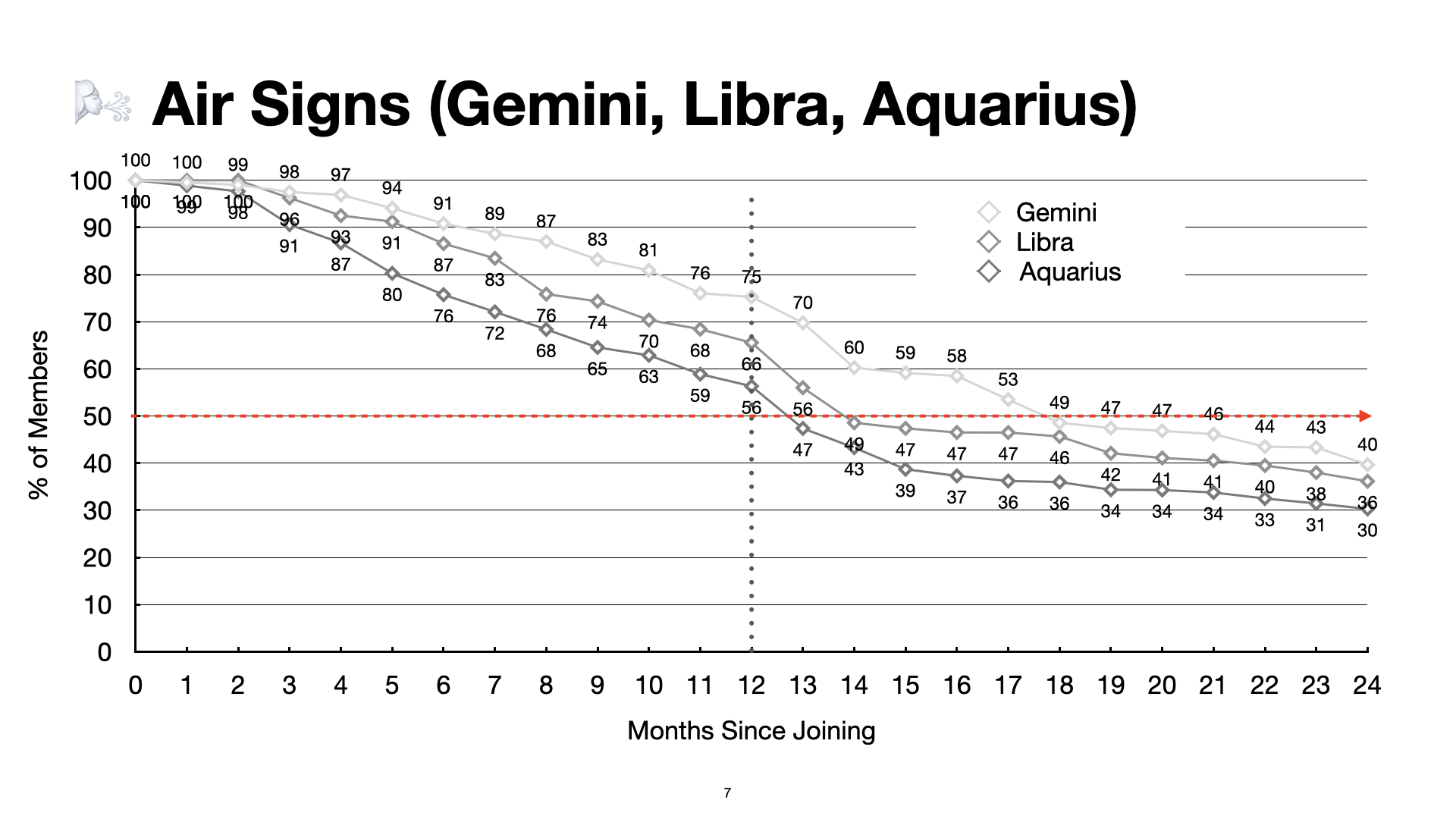 Air signs, which include Gemini, Libra, and Aquarius, introduce another layer of complexity. These members are typically more socially driven and mentally engaged. They are curious, open to new experiences, and often motivated by interaction rather than routine.
Their attendance patterns tend to fluctuate more than Earth signs, not due to lack of interest, but due to a need for variety and stimulation. Repetition can lead to disengagement, particularly if there is little opportunity for interaction or change. However, when the environment supports social connection and variety, their retention improves significantly.
Group exercise, partner-based activities, and socially engaging formats tend to resonate strongly with this group. They are also more likely to engage with digital tools, challenges, and interactive elements that add a layer of interest to their experience. For operators, this highlights the importance of creating opportunities for connection. Programming does not need to be complex, but it does need to feel dynamic and engaging.
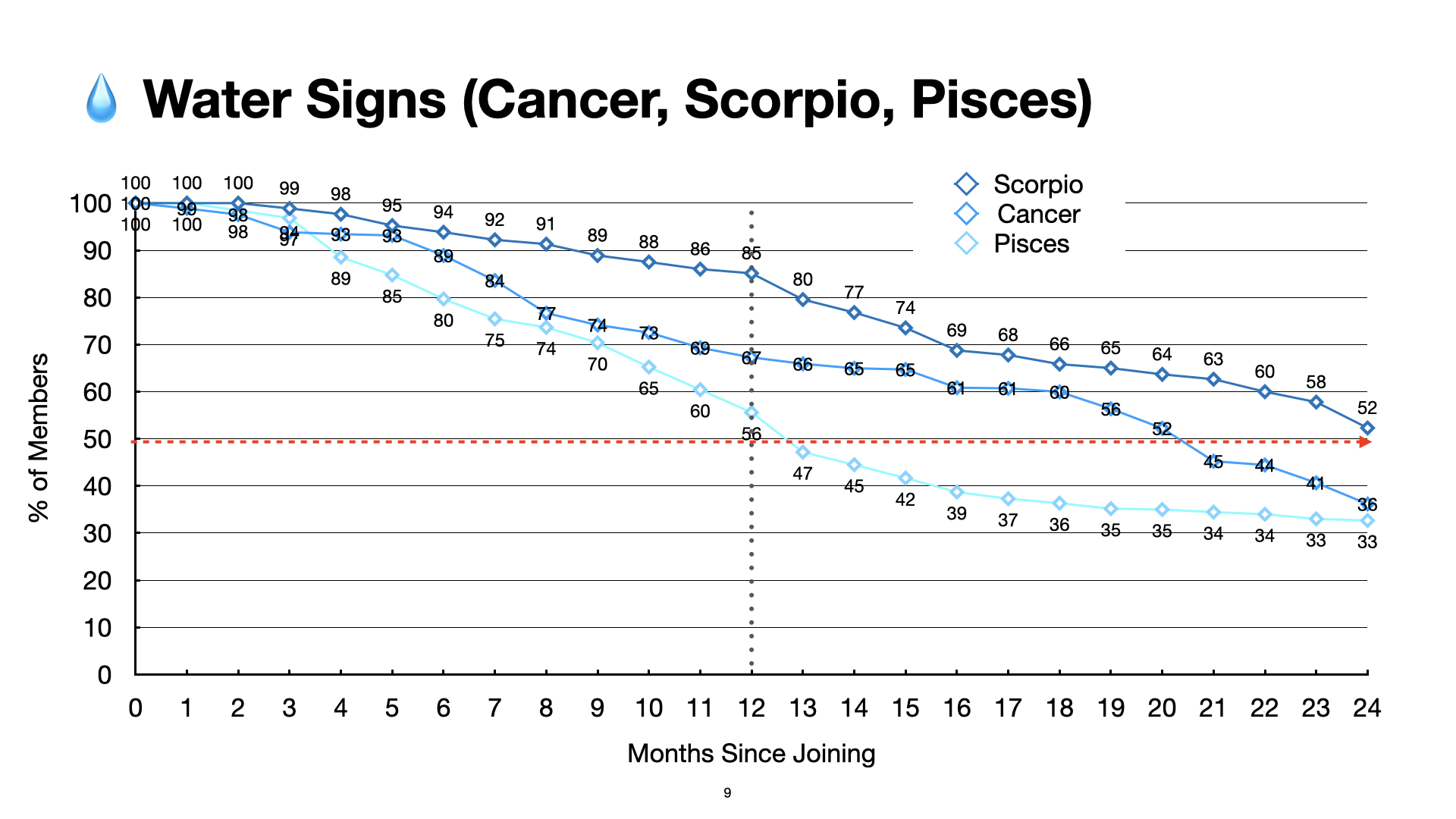
Water signs, including Cancer, Scorpio, and Pisces, show a different type of behavioural pattern again. These members are often more influenced by how they feel than by what they are doing. Their attendance is closely linked to emotional connection, environment, and personal relevance.
They may not always present as highly consistent in the early stages, but when they develop a sense of belonging or emotional attachment, their retention can become very strong. Conversely, if that connection is missing, attendance can be more variable.
This group responds well to environments that feel supportive and welcoming. The tone of communication, the atmosphere of the facility, and the quality of staff interaction all play a role. For Water-type members, exercise is not purely functional. It needs to feel meaningful in some way, whether that is through stress relief, personal wellbeing, or a sense of connection.
From an operational perspective, this reinforces the importance of the human element. Small interactions, remembering names, and creating a sense of familiarity can have a disproportionate impact on this group. It is less about the programme itself and more about how the experience is delivered.
When viewed collectively, these patterns do not replace existing retention frameworks, but they do offer an additional perspective. They highlight the diversity of behavioural drivers within a membership base and the limitations of applying a single approach to all members.
What this model suggests is that retention is not only about what members do, but about how they experience what they do. Some are driven by challenge, others by structure, others by social interaction, and others by emotional connection. These differences are often visible early, but they are not always explicitly recognised.
In practical terms, operators do not need to segment members by zodiac sign to apply these insights. The value lies in recognising the underlying behavioural patterns and adapting accordingly. Onboarding conversations can be used to identify preferences. Programming can be designed with flexibility in mind. Staff can be trained to recognise different engagement styles and respond appropriately.
For example, a member who thrives on challenge may benefit from early goal setting and progression tracking. A member who prefers structure may respond better to a clearly defined programme. Someone who values social interaction may engage more with group-based activities, while another who seeks emotional connection may benefit from a more personalised approach.
These are not new concepts in isolation, but this lens brings them together in a way that is both accessible and actionable. It provides a framework for thinking differently about member behaviour and, importantly, for responding to it in a more individualised way.
Retention has always been about understanding people. The more accurately we can interpret behaviour, the more effectively we can support it. Whether the starting point is traditional data, behavioural science, or something less conventional, the principle remains the same.
Members do not all engage with exercise in the same way. The operators who recognise and respond to those differences are the ones who create environments where people not only start, but continue.
Paul Bedford PhD, Retention Guru Ltd
P.s. Before anyone builds a “Leo-only class timetable”…
This was an April Fools piece.
But the behaviours behind it are very real.
Different members need different things.
The operators who spot that early tend to retain more of them.
Join our Free Retention Guru Community
This group is for those who want to increase retention, reduce attrition and improve the customer experience in a health club environment. It's here for you to share your wins, your challenges and your experiences. It’s here so that you can find support and be supportive.

8 most common mistakes operators make.
Simply enter your name and email to download your free copy today!