
Can You Recycle Your Members?

Why Former Members Are Your Most Valuable Untapped Market
For decades, the health and fitness industry has been driven by a single dominant strategy: acquisition. Clubs pour time, money, and energy into attracting new members every month. Yet, beneath this focus lies an enormous opportunity that is often overlooked, the potential to bring back those who have left. Former members are already familiar with the brand, the building, the people, and the experience. They joined once because they believed the club could help them. And that belief can be reignited.
This shift from pure acquisition to strategic re-engagement is becoming essential in an increasingly competitive marketplace. The question is no longer, “How many new members can we sign up?” Instead, the more commercially intelligent question is, “How many members can we recover?” If the industry is willing to recycle waste materials to save money and protect the environment, surely recycling members who are far more valuable, is...
Culture Keeps CrossFit Members Longer Than Any Retention Program

Walk into a CrossFit gym and you notice it immediately.
People talk to each other. Coaches know names. Someone stays behind to cheer the last finisher. There’s an energy that feels very different from a traditional gym floor.
That difference isn’t accidental, and it isn’t about the workouts alone.
Across the industry, CrossFit has become one of the clearest examples of how culture drives retention. Not through gimmicks or discounts, but through daily behaviours, shared standards, and an environment people feel part of rather than simply signed up to.
This article explores why CrossFit culture works so well for retention, what sits beneath the surface of that community feel, and what operators in any fitness setting can learn from it.
Culture First, Community Second
One of the most misunderstood ideas in fitness is the belief that community can be created directly. In reality, community is rarely something you “build” intentionally through events or social media alone.
Community...
Designing Group Exercise for Habit, Belonging, and Consistency. A guide for Boutique fitness owners

Boutique fitness studios rarely struggle to attract attention. They are good at creating energy, excitement, and a sense of novelty. The challenge comes later, after the first few weeks, when the glow of a new studio fades and everyday life returns, many members quietly drift away. This is not usually because the workouts are poor or the brand is weak. More often, it is because attendance never becomes stable enough to survive the realities of busy lives.
In fact data we have on boutique studios has shown as many as 92% of attendees do not make it past 2 months.
Retention in boutique fitness is often discussed in terms of programming quality, instructor charisma, or community vibe. While all of these matter, they miss a deeper point, retention is not driven by how impressive a workout feels on day one. It is driven by how easy it becomes to repeat on day thirty, day sixty, and beyond. Group exercise, when intentionally designed, is one of the most powerful retention tools boutique st...
The Changing Face of the Customer.

The health and fitness consumers are changing faster than ever before. In the past, your customers used to compare you to the competition. Those people who were in your town, maybe in your local area, the same sector, and then slowly they started to compare you to online. Now your customers compare you to every customer experience they have with every brand they interact with. Not only that they look online at images of gyms from around the country, around the world and ask, why doesn’t our gym look like that?
Brands like Uber, Amazon, Netflix, Airbnb, among others have not only disrupted their respective industries, but have changed how consumers shop for products and services.
When customers are exposed to far better and more engaging and personalized customer experiences, they apply these newly raised expectations to other brands and industries.
You know that, far better, more engaging, personalized and more memorable customer experience. Remember when experiences are memorable, ...
Association of British Climbing Walls (ABC) Retention Presentation
I was delighted to be asked to speak at the Association of British Climbing Walls event at the Magna Science Park in Sheffield. In this keynote presentation I describe what we have learnt in the fitness industry that may help improve retention for climbing wall businesses.
"What can I do for you?"

This article first appeared in Fitness MANAGEMENT international (Germany)
In this article, we want to explain the factors that have a lasting influence on member retention for fitness studios, as well as provide food for thought and possible solutions for your studio practice.
In the first part of the article in fMi 1/2021 we illustrated the two basic factors for effective retention of your members in your studio: the regular visits of your members to the studio as well as the finely "dosed" interaction with members and prospects.
3. Programming
As the third most important aspect of member retention, we have identified "programming" in the team. This refers to the training offered in the studio in general as well as its individual design in the form of training plans. What training options does the club offer its members and how does it communicate them to its members and interested parties. In order to be able to better understand the mechanisms in this area, we divide the exerci...
Self-service can still be Member Service
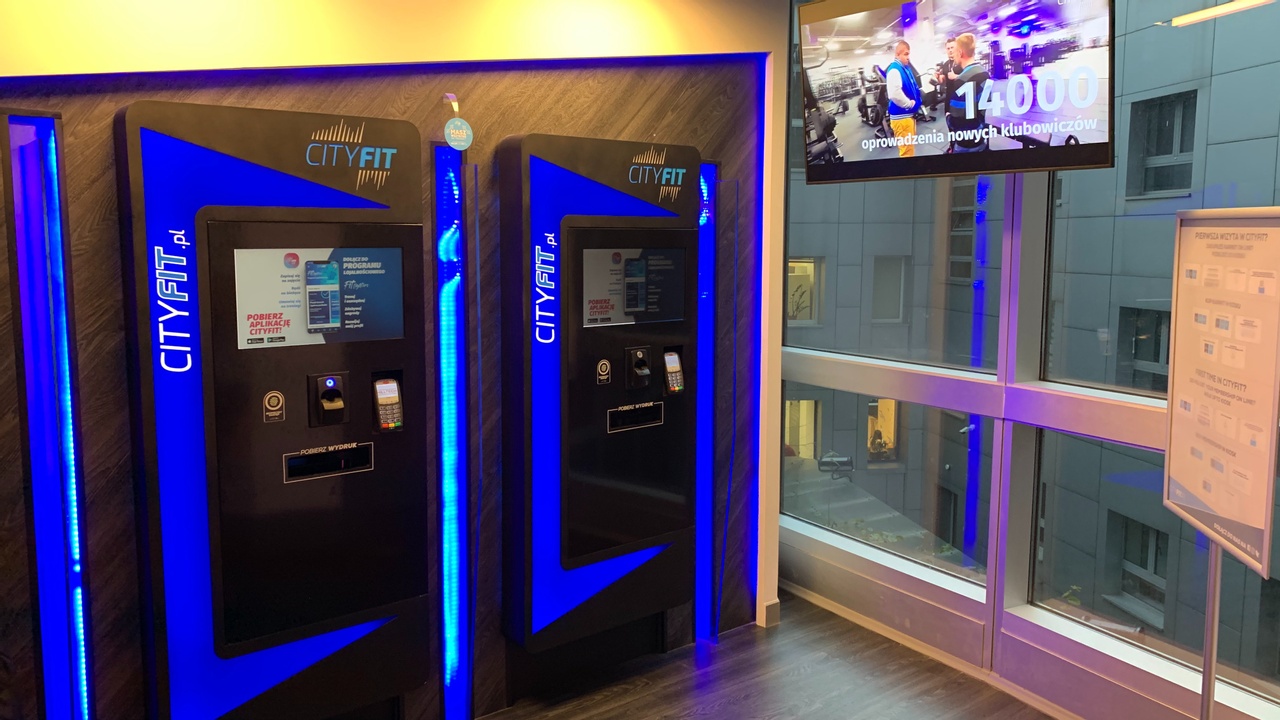
I’ve said it in meetings, at conferences and in webinars that the member experience and member service is one of those parts of your business that you just can’t afford to get wrong. The recent pandemic has seen many businesses relocate staff from brick and mortar to work from home environments. Often without sufficient training or the technology to support such interactions. I have changed my business banking and telecoms supplier during this time simply because my existing providers were not able to meet my self-service needs. Yes I do want to be able to do some things using self service tools, particularly if they are routine behaviours.
With so many more interactions and transactions taking place online, members are really getting an insight into those businesses that have evolved and those that are still lagging behind.
Think about how uncomfortable you feel when you hear someone speak negatively about their experience with your business and how often is it because their experie...
Member retention success: Understanding surveys and feedback loops
How can you use surveys and customer feedback to attract new members to your club and, more importantly, make sure they stay? In this blog I’m going to share with you some invaluable tools that you can use to gain important information about your customers. I’m also going to tell you what you can do with that data in order to create member retention success.
A robust methodology
If you want feedback from your customers, always think about why you're actually asking them questions. What is it you're trying to understand by getting feedback from your members? Who are you wanting to hear from and who is actually responding when you send out a survey? For feedback to make a difference to your business, you need a robust methodology.
Think about the timeline of them being a customer before you survey them. Are you going to ask them for feedback on day five, day ten, day 90? Or maybe your goal is to get to know what’s going on with your customers at different points throughout the calen...
Managing member behaviour as you transition back into gym life
What’s the best way to build confidence amongst members when it comes to reopening the doors of your club? How can you communicate rules relating to Covid-19 and ensure they are followed by all?
There's an increasing amount of speculation and information about the process of reopening gyms, but very little so far to do with training staff on how to cope and deal with reopening when it comes to the actual member experience.
Visual prompts to guide members
One of the things to be aware of, is that we often take our cues from visual prompts. When we see a red traffic light, we know it’s a signal to stop, but the traffic light doesn't actually stop us. It's just a signal.
When it comes to reopening gyms, we can use visual prompts to help our customers behave the way we need them to behave at this time.
Visual prompts need to be both before, during, and after their visit. Adam Zeittsiff's team at Gold's in the US are preparing to open some of their clubs and have created signage out...
Digital Intervention for Retention not sales Pt 4.
In the final part of our series on customer retention, Digital intervention for retention not sales we explain how to use CRM systems as a digital intervention for retention…
Most CRM and marketing systems are all aiming to resell. Think about your Facebook feed, if you click on an ad you’re then haunted for the next three months by the fact you searched for a new greenhouse for your Grandfather! But it doesn’t have to be like that. You can use the same technology when someone has joined your club to send reassuring, supportive messages.
So, when a new person signs up from your joining page, send them a thank you note and use a retargeting pixel to interact with them via pop up messages during their first three months of membership, such as ‘How are you finding the club?’, ‘We're glad you're part of our community’, ‘Here's a testimonial from someone who's achieved similar things to you’. You can simply take all the strategies used to attract new people and repurpose them to reinfo...

8 most common mistakes operators make.
Simply enter your name and email to download your free copy today!